Do FitFlops Actually Replace Custom Orthotics? Podiatrists Weigh In
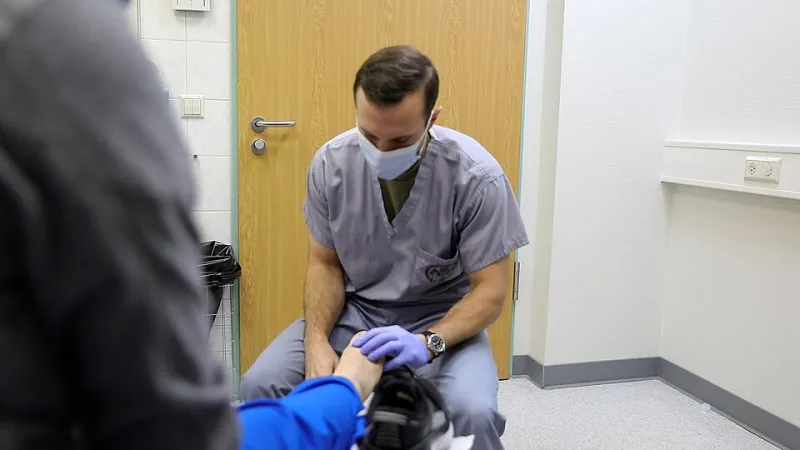
Photo: Marcy Sanchez, Public domain, via Wikimedia Commons
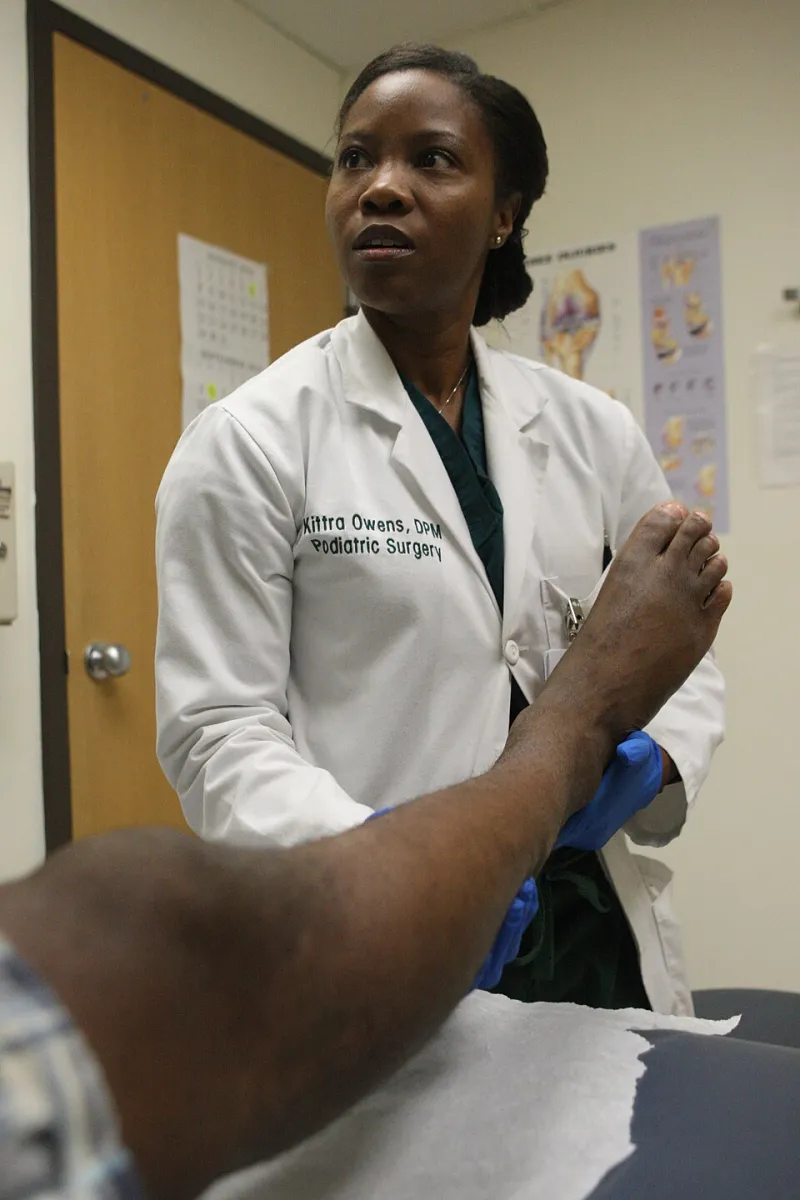
If you've ever walked out of a podiatrist's office with a prescription for custom orthotics, you've probably done a double-take at the price tag. Depending on your insurance situation, a pair of custom-molded insoles can set you back anywhere from $200 to $800. That's a significant investment — especially when some patients report getting just as much relief from a well-engineered pair of supportive sandals.
So what's actually going on here? Are FitFlops genuinely a viable alternative for people dealing with plantar fasciitis, flat feet, or chronic heel pain? Or is that just wishful thinking from bargain hunters? We reached out to podiatrists and physical therapists to get a straight answer.
What Makes FitFlops Different From Regular Sandals
Before we get into comparisons, it's worth understanding what separates FitFlops from the average drugstore flip-flop. FitFlop's proprietary Microwobbleboard™ midsole technology was originally developed with biomechanics researchers at London Metropolitan University. The multi-density foam construction is designed to absorb shock, distribute pressure more evenly across the foot, and reduce muscle fatigue during walking.
More recent FitFlop lines have expanded on that foundation with features like anatomically contoured footbeds, reinforced arch zones, and heel cups — elements that look a lot like what you'd find in a quality orthotic insert. That's not a coincidence. FitFlop has been deliberately engineering their footwear to address the same mechanical problems that orthotics are designed to correct.
What Podiatrists Are Actually Saying
Here's where it gets interesting. A growing number of foot health professionals are acknowledging that for mild to moderate cases of common conditions — think early-stage plantar fasciitis, mild overpronation, or general arch fatigue — a well-designed supportive shoe or sandal can be genuinely effective.
"For patients who are dealing with plantar fasciitis that hasn't progressed too far, I often recommend trying a supportive footwear option first before we jump straight to custom orthotics," says one podiatrist based in the Chicago area who sees a high volume of patients with activity-related foot pain. "The key is that the shoe has to actually provide meaningful arch support and cushioning — not just look like it does. Some of the FitFlop styles I've seen patients wearing do check those boxes."
A physical therapist working with a sports medicine clinic in Austin echoed that sentiment: "The biomechanical principles FitFlop uses aren't gimmicks. Distributing load across the foot, supporting the medial arch, and reducing heel strike impact — those are real therapeutic goals. Whether a shoe accomplishes them depends on the specific design and the individual foot, but it's not out of the question."
That said, neither professional was willing to write off prescription orthotics entirely. The consensus seems to be that context matters enormously.
When FitFlops Are Likely Enough
For a lot of Americans dealing with everyday foot discomfort, FitFlops may genuinely be sufficient. Here are the scenarios where foot health professionals tend to agree that supportive footwear — rather than custom orthotics — is a reasonable starting point:
- Mild plantar fasciitis: If you're catching it early, good arch support and cushioning can reduce strain on the plantar fascia before it becomes a chronic problem.
- General arch fatigue: People who spend long hours on hard floors — teachers, retail workers, nurses — often just need better shock absorption and arch support to eliminate daily pain.
- Mild flat feet: For adults with flexible flat feet who don't have significant alignment issues traveling up the kinetic chain, supportive footwear is frequently all that's needed.
- Post-recovery maintenance: Some patients who've completed physical therapy use supportive sandals like FitFlops to maintain gains without continuing to wear bulkier orthotic devices.
"If someone comes in and their symptoms are relatively new and not severe, I'm not going to immediately push them toward a $500 solution," one podiatrist noted. "We try the conservative route first — stretching, supportive footwear, activity modification. A lot of people improve significantly without ever needing custom orthotics."
When You Actually Need a Prescription Solution
Here's the part where we have to be honest: FitFlops are not a universal substitute for custom orthotics, and no responsible foot health professional would claim otherwise. There are real situations where prescription devices are the appropriate — and sometimes necessary — intervention.
Custom orthotics become the better option when:
- Structural deformities are involved: Significant bunions, hammertoes, or severe pes planus (flat foot) with associated ankle or knee pain often require precision correction that a commercial shoe can't provide.
- Symptoms are severe or chronic: Long-standing plantar fasciitis that hasn't responded to conservative treatment, or heel spurs causing significant daily limitations, may need targeted offloading.
- Gait abnormalities affect the whole body: When overpronation or supination is causing hip, knee, or lower back issues, a custom device calibrated to your specific mechanics is often essential.
- Diabetic foot complications: Patients with diabetes need medical-grade footwear solutions, full stop. This is not a situation for DIY shoe shopping.
"The mistake I see is people going too far in either direction," said the Austin-based physical therapist. "Some patients refuse orthotics because they're expensive and just keep wearing bad shoes. Others get custom orthotics prescribed and then wear them in terrible footwear the rest of the time. Neither approach makes sense. Good supportive footwear is part of the equation regardless."
The Cost Comparison Is Real — and It Matters
Let's talk dollars, because for most American families, cost is a legitimate factor in healthcare decisions. Custom orthotics typically run $300–$800 per pair, and insurance coverage is inconsistent. Many plans require documented medical necessity and still only cover a portion of the cost.
A pair of FitFlops, by contrast, generally falls in the $60–$130 range at retail — and with end-of-season sales or outlet deals (the kind we track regularly here at FitFlop Sale Hub), you can often find quality styles for $40–$70. That's a meaningful difference.
For someone who needs to manage foot discomfort on a tight budget, spending $60 on a pair of supportive FitFlop sandals before committing to hundreds of dollars in orthotics is a reasonable first step — provided the underlying issue isn't severe enough to require immediate medical intervention.
The Smart Approach: A Two-Step Strategy
If you're dealing with foot pain and trying to figure out the right move, here's a practical framework based on what the professionals we spoke with actually recommend:
- Start with supportive footwear: Try a FitFlop style with strong arch support (the Lulu, the Walkstar, or the Rally sneaker are worth considering) for 4–6 weeks. Pair it with basic stretching.
- Track your symptoms honestly: Are you improving, holding steady, or getting worse? Keep notes.
- See a podiatrist if things aren't improving: Don't wait through months of pain. A proper evaluation is worth the co-pay, and a good podiatrist will tell you honestly whether you need custom orthotics or whether you just need better shoes.
The bottom line: FitFlops aren't magic, and they're not a replacement for professional medical care when that's what's genuinely needed. But for a large portion of comfort-seeking Americans dealing with common, moderate foot issues, they represent a legitimate and significantly more affordable first line of defense — one that more and more foot health professionals are comfortable recommending.